
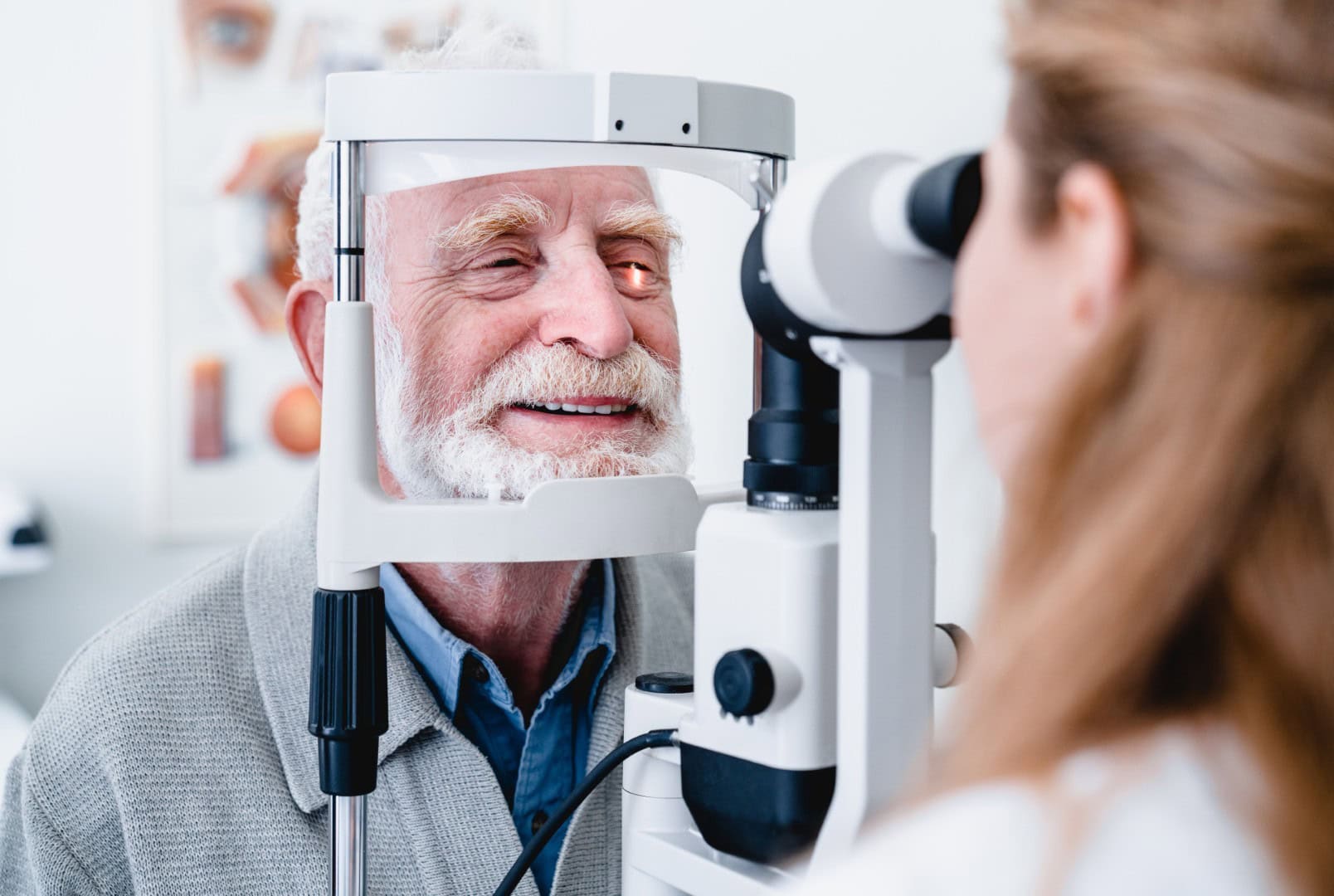
Macular degeneration is an eye condition that affects the macula, the small area at the centre of the retina responsible for detailed central vision. It can make activities such as reading, recognising faces and seeing fine detail more difficult. Age-related macular degeneration (AMD) is more common as people get older, but changes to vision do not always appear straight away.
One of the challenges with AMD is that early stages may cause few noticeable symptoms, and some people only become aware of a problem as their vision changes. Other people may notice blurring, distortion or difficulty seeing details in the centre of their sight. Understanding the possible signs can help you know when to arrange an eye examination and why regular checks remain important, even when your vision seems normal.
What Is Age-Related Macular Degeneration?

The macula is part of the retina, the light-sensitive tissue at the back of the eye. It is responsible for central vision and helps you see the fine detail needed for tasks such as reading, using a phone, recognising people and looking at objects directly in front of you. The area around the macula supports peripheral, or side, vision.
Age-related macular degeneration develops when the macula changes over time. It does not usually affect your side vision, but damage to the central area can make detailed tasks increasingly difficult. AMD is not the same as needing a stronger glasses prescription, and changing your spectacles will not treat the underlying condition.
AMD can affect one eye or both. It also develops differently from person to person. Some people have early changes that remain stable for a long time, while others experience progression. In some cases, vision can deteriorate more quickly, which is why new or sudden changes should never be ignored.
What Are the Earliest Signs of Macular Degeneration?
A common sign of macular degeneration is a blurred or distorted area in the centre of your vision. You might find that words look unclear when reading, details are harder to make out or familiar faces become more difficult to recognise. Straight lines, such as door frames, window frames or lines of text, may appear bent or wavy rather than straight.
Other changes can include colours seeming less vivid, increased sensitivity to bright light, or finding it harder to adjust when moving between bright and dim environments. Some people notice a dark, blurred or missing patch near the centre of their vision. These symptoms can affect everyday activities gradually, so they may not be obvious at first.
It is important to understand that early AMD does not always produce noticeable symptoms. Changes may be identified during a routine eye examination before someone realises that their sight has been affected. AMD can also affect one eye more than the other, which may make changes harder to notice when both eyes are being used together.
These symptoms do not automatically mean that you have macular degeneration. Other eye conditions can cause similar changes, so an examination is needed to establish what is happening. The NHS provides further information about the symptoms of age-related macular degeneration.
How Does Dry Macular Degeneration Differ From Wet AMD?
There are two main forms of age-related macular degeneration: dry AMD and wet AMD. They affect the macula in different ways and can progress at different rates. Knowing the difference helps explain why monitoring changes in vision is important, although only an appropriate eye examination can establish which type is present.
Dry AMD is the more common form. It is associated with gradual changes to the cells of the macula and the build-up of small deposits called drusen beneath the retina. It often develops slowly, and some people have few or no noticeable symptoms in the early stages. If it progresses, central vision may become increasingly blurred or distorted.
Wet AMD is less common but can cause vision to deteriorate more quickly. It develops when abnormal blood vessels grow beneath the retina and leak fluid or blood, affecting the macula. Changes may happen over days or weeks rather than gradually over several years. Any new or sudden distortion of central vision should be assessed urgently, rather than waiting for a routine appointment.
The two forms require different approaches to monitoring and care. Treatment options depend on the type and stage of AMD. Wet AMD may be treated with injections into the eye to help limit further damage, while care for dry AMD may involve monitoring, advice and support for changes to vision. Your eye specialist can explain the options relevant to your diagnosis. The Macular Society provides further information about dry age-related macular degeneration.
Who Is More Likely to Develop Macular Degeneration?
Age is the main risk factor for age-related macular degeneration, and the condition is more common in people over 50. However, getting older does not mean that someone will inevitably develop AMD. Other factors can influence a person’s likelihood of developing the condition.
Smoking is an important risk factor. A family history of AMD can also increase risk, as can certain wider health factors such as high blood pressure and being overweight. These factors do not mean that someone will definitely develop the condition, but they are relevant when considering overall eye health.
Some risk factors cannot be changed, including age and family history. Others may be influenced through lifestyle choices. Not smoking, maintaining a healthy weight, staying physically active and eating a balanced diet can support general health. These steps cannot guarantee that AMD will be prevented, and they should not replace regular eye examinations or advice from an eye-care professional.
If a close family member has been diagnosed with AMD, mention this when you attend an eye examination. Sharing your family history and any changes you have noticed can help your optometrist understand your concerns and advise whether additional monitoring is appropriate.
How Is Macular Degeneration Detected During an Eye Examination?
An eye examination can help identify changes to the macula, sometimes before you notice a difference in your vision. Your optometrist will ask about your eye health, medical history and any symptoms you have experienced. They will also assess your vision and examine the back of your eyes to look for signs of retinal changes.
Depending on the examination and the findings, additional imaging may be recommended. Retinal photography can provide a record of the appearance of the back of the eye, while an Optical Coherence Tomography (OCT) scan produces detailed cross-sectional images of retinal structures. These investigations can help an optometrist assess the macula and identify changes that may need monitoring or further investigation.
At Goldsmith & Harvey, the eye-care service includes comprehensive eye examinations and OCT imaging to assess retinal health and identify potential concerns. If you would like to understand more about the practice’s approach to eye health checks and diagnostic services, you can explore its eye care service.
If an optometrist suspects AMD or another condition that needs specialist attention, they may arrange a referral to an ophthalmologist or an appropriate eye-care service. Further tests and treatment decisions are made according to the findings and the type of condition identified. An eye examination is therefore an important starting point, but it does not mean every suspected condition will be managed entirely within a high-street practice.
When Should You Seek Professional Advice About Changes to Your Vision?
Arrange an eye examination if you notice persistent changes to your vision, such as blurred central sight, distorted lines, difficulty reading or a change in how clearly you recognise faces. It is worth getting changes checked even if they seem minor or affect only one eye. Do not assume that new glasses will resolve the problem without first having your eye health assessed.
Sudden changes need more urgent attention. If straight lines suddenly appear bent or wavy, a new blurred or grey patch develops in the centre of your vision, or your central vision deteriorates quickly, contact an optician urgently and do not wait for a routine appointment. The NHS advises getting an urgent optician’s appointment or contacting NHS 111 if your vision gets suddenly worse. If you cannot arrange an urgent optician appointment, NHS 111 can advise on where to seek help. A dark curtain or shadow moving across your sight, or a red and painful eye, can indicate other eye problems that also need prompt assessment. If you suddenly lose vision or experience severe eye pain, seek emergency help.
If you have already been diagnosed with AMD, follow the monitoring arrangements recommended by your eye-care team. Contact your optometrist or hospital eye specialist promptly if you notice a new symptom or a sudden change, even if you are already attending regular appointments. Keeping track of changes and acting quickly can help ensure that any necessary assessment is not delayed.
Regular eye examinations remain important even when your sight appears normal. Some early changes do not cause obvious symptoms, and an optometrist can assess the health of your eyes as well as checking how clearly you see.
Looking After Your Central Vision
The early signs of macular degeneration can include blurred or distorted central vision, straight lines appearing wavy, difficulty reading and changes in how colours or details appear. However, early AMD may cause no noticeable symptoms, which is one reason routine eye examinations are important, particularly as you get older or if you have a family history of the condition.
If you have noticed changes to your sight, arrange an eye examination rather than assuming they are simply part of getting older or that a new glasses prescription will resolve them. Goldsmith & Harvey provides comprehensive eye examinations and advanced diagnostic services to help assess eye health and identify potential concerns.
To discuss an eye-health concern or arrange an appointment, contact Goldsmith & Harvey.