
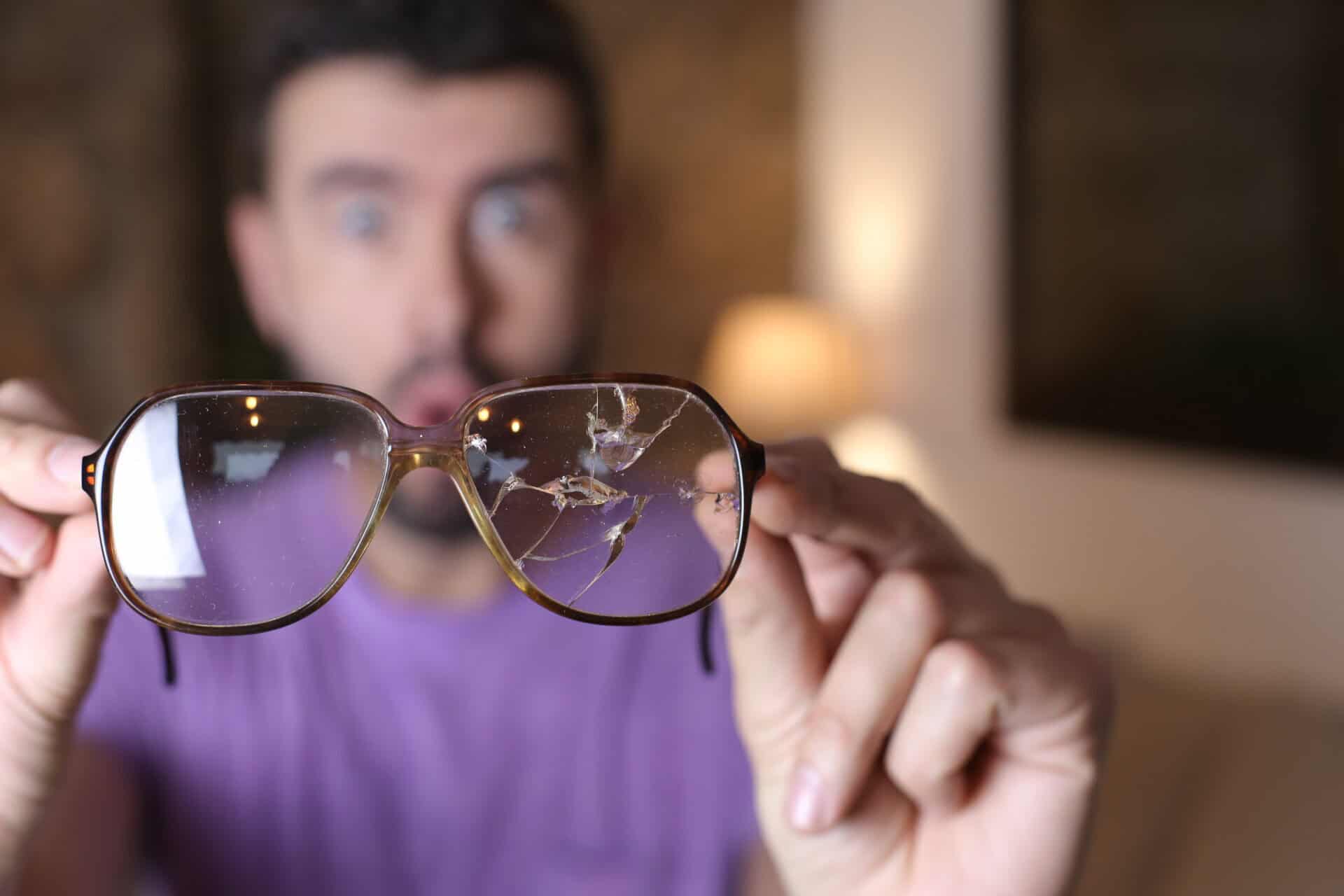
If you’re wondering, can you get glasses repaired at an optician, the answer is often yes. The type of damage, the condition of the frames and the availability of suitable replacement parts will all influence what can be done. If you rely on your glasses every day, knowing where to turn for help can make a real difference.
So, can you get your glasses repaired at an optician? In many cases, yes. Opticians may be able to carry out minor repairs and adjustments, although the options depend on the type of damage, the frame material and the availability of suitable replacement parts. Some problems can be resolved with a straightforward adjustment, while others may require specialist work or a replacement frame. Understanding the difference can help you decide what to do next.
What Types of Glasses Damage Can an Optician Repair?
Glasses experience regular wear through everyday use. Taking them on and off, folding the arms and placing them in a bag can gradually loosen components or affect the way the frames sit. Even a small problem can make spectacles uncomfortable or cause them to slip out of position.
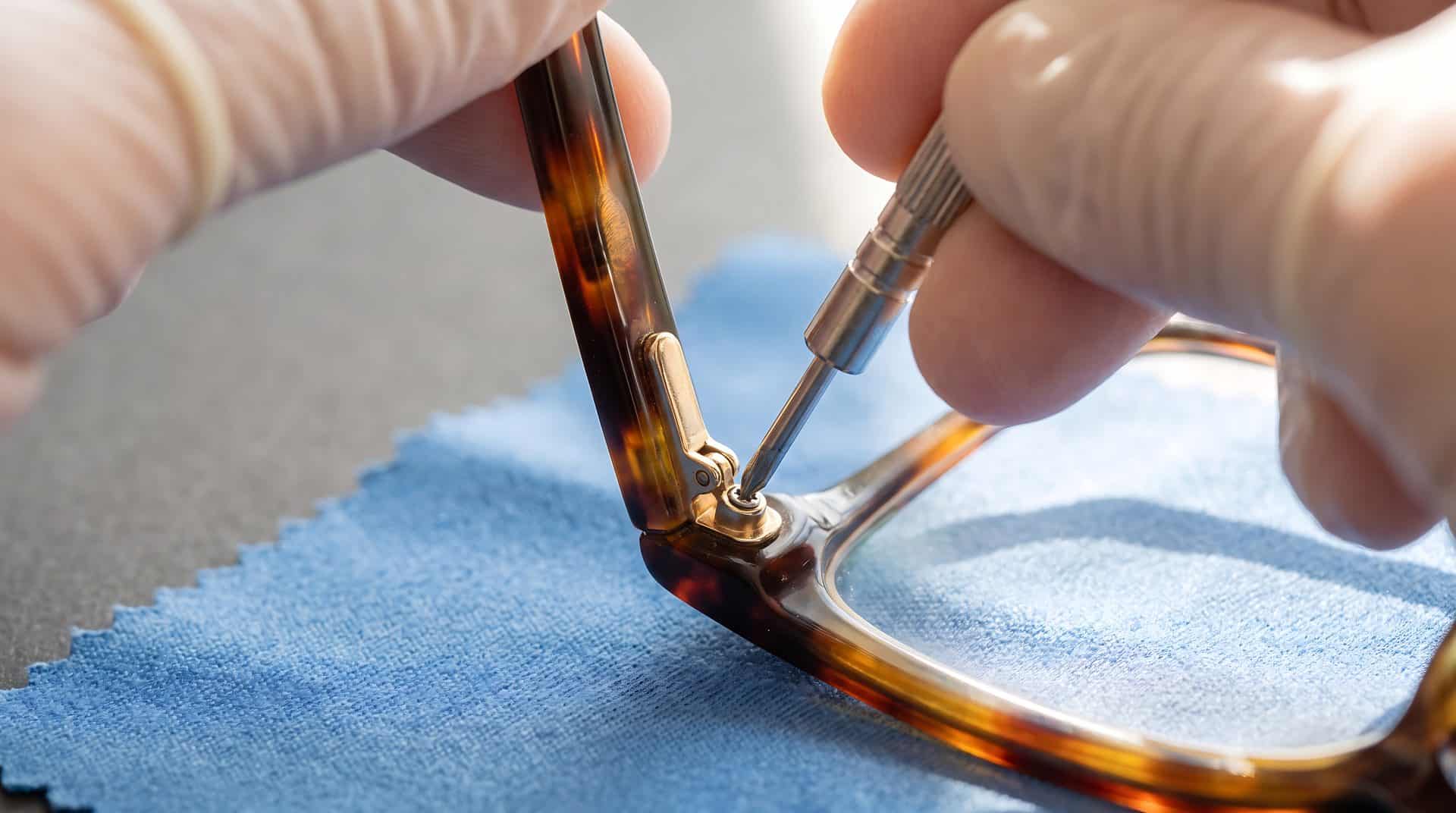
Common issues that an optical practice may be able to address include loose hinge screws, missing or worn nose pads, slightly misaligned arms and frames that no longer sit evenly. A loose lens may also need attention if the frame has shifted or its retaining components have become displaced. Some semi-rimless glasses use a nylon cord to hold the lens in place, which may also need replacing if it becomes worn or damaged.
The type of repair possible depends on the frame’s construction and condition. Metal, plastic and rimless frames each have different components and require appropriate handling. An adjustment that is straightforward on one frame may be unsuitable for another, particularly if the material has become brittle or weakened.
Goldsmith & Harvey offers aftercare support that includes emergency eyewear repairs and adjustments, including screw replacement. The team can advise on the options available after assessing the damage.
What Types of Glasses Damage Cannot Be Repaired?
Although many minor problems can be addressed, some damage is more difficult to resolve. A frame with a badly cracked bridge, a snapped front or a severely damaged hinge may no longer provide a reliable structure for holding the lenses securely. Even if a temporary repair appears possible, it may not restore the strength or stability needed for everyday wear.
Plastic frames can become brittle over time, particularly after prolonged exposure to heat, sunlight or repeated stress. A crack near a hinge or across the bridge may spread when the glasses are opened, closed or adjusted. Metal frames can also suffer damage where a joint or hinge has broken away from the main structure. Some specialist repairs may be possible, but these are not necessarily offered by every optical practice.
Damaged lenses present a separate problem. Surface marks and scratches generally cannot be removed safely without affecting the lens material or its coatings. A cracked or chipped lens will usually need replacing rather than repairing. Continuing to wear spectacles with significant lens damage may also affect comfortable and clear vision.
An optician can assess whether a repair is practical and whether the finished frame is likely to remain suitable for use. If the damage affects the structural integrity of the glasses, replacement may be the safer and more reliable option.
Is It Better to Repair or Replace Broken Glasses?
Deciding whether to repair or replace broken glasses involves more than looking at the immediate damage. The age and condition of the frames, the type of breakage and the cost of obtaining suitable replacement parts can all influence the decision.
A minor problem, such as a loose screw or displaced nose pad, may be relatively straightforward to address. If the frames are otherwise in good condition and still fit comfortably, a repair could help extend their useful life. There may be little reason to replace an entire pair simply because one small component needs attention.
More extensive damage can make replacement worth considering. A frame that has cracked in several places, become distorted or repeatedly developed faults may not be a dependable option for further repairs. It is also important to consider the condition and age of the prescription lenses. If your prescription has changed or the lenses are damaged, replacing them may be more appropriate than repairing the original frame.
An optician can examine the spectacles and explain the available options. They can consider whether the frame can be repaired, whether replacement components are suitable and whether new frames or lenses would provide a more practical long-term solution. This allows you to make an informed decision rather than automatically choosing the cheapest immediate fix.
Can You Put Old Lenses into New Frames?
If your frames are damaged but the prescription lenses remain in good condition, you may wonder whether they can be transferred into another pair. This can sometimes be possible, but it depends on whether the existing lenses are compatible with the replacement frame.
Prescription lenses are manufactured and shaped to fit particular frame dimensions. Their size, curvature, thickness and positioning all need to be suitable for the new frame. An optician must also check that the lenses’ optical centres are appropriately aligned with your pupils in the replacement frame. Incorrect positioning can introduce unwanted prismatic effects and affect visual comfort. A replacement frame that is smaller or shaped differently may not accommodate the original lenses, even if it appears similar.
An optician can assess whether transferring existing lenses is a realistic option. However, if the lenses do not fit properly or are no longer suitable, new lenses may be needed.
Goldsmith & Harvey confirms that it can fit prescription lenses into most frames. Its team can help customers consider suitable frame and lens combinations, taking account of their prescription, comfort and individual requirements. You can explore the available options through its frames and lenses service.
Can an Optician Repair Glasses Bought Somewhere Else?
You do not necessarily have to return to the original retailer whenever your glasses need attention. An independent optician may be willing to inspect spectacles purchased elsewhere and advise whether an adjustment or repair is possible.
However, this is not guaranteed. Different manufacturers use different frame designs, materials and components, and replacement parts may not always be available. Older frames can also become more fragile, making adjustments riskier than they would be on newer spectacles. Some practices may have policies about working on frames they did not originally supply.
It is worth explaining what has happened before visiting and asking whether the practice can assess the damage. If you have the original case, paperwork or details of the frame manufacturer, these may also help identify the model and any suitable replacement components.
The important point is that an optician should assess the condition of the spectacles before agreeing to carry out work. This helps establish whether the proposed repair is appropriate and whether the frame is likely to remain safe and comfortable to wear.
What Should You Do If Your Glasses Break?
If your glasses break, try not to rush into repairing them yourself. Forcing a bent frame back into position or applying household adhesives can cause further damage, particularly around hinges, joints and delicate lens fittings. Superglue may also leave residue on the lenses or frame and make a professional repair more difficult.
Instead, collect any loose screws or broken pieces and keep them together in a protective case. Avoid wearing spectacles with sharp edges, loose lenses or significant structural damage. If you have a suitable spare pair, use these temporarily while arranging an assessment.
Contact an optical practice and explain what has happened. If possible, describe where the frame has broken and whether the lenses have been affected. The team can advise whether you should bring the spectacles in for inspection and what options might be available.
If the damage cannot be repaired, you can discuss replacement frames or lenses. It is also worth checking whether a manufacturer warranty, insurance policy or aftercare arrangement covers the damage. Certain people may qualify for NHS help towards repair or replacement costs, although eligibility depends on individual circumstances.
Taking prompt advice can help prevent a minor problem from becoming more serious and make it easier to find a suitable solution.
Getting Help with Damaged Glasses
Getting your glasses repaired at an optician is often possible, particularly when the problem involves a loose screw, displaced nose pad or minor frame adjustment. More serious damage may require specialist work or replacement, depending on the frame material, its condition and the availability of suitable parts.
The best starting point is to have the spectacles assessed rather than attempting a repair that could make the damage worse. Goldsmith & Harvey provides eyewear aftercare, emergency repairs and adjustments, with its team able to advise on the options available.
If your glasses are damaged or no longer fitting comfortably, Goldsmith & Harvey can help you explore the next steps and consider suitable eyewear solutions.